
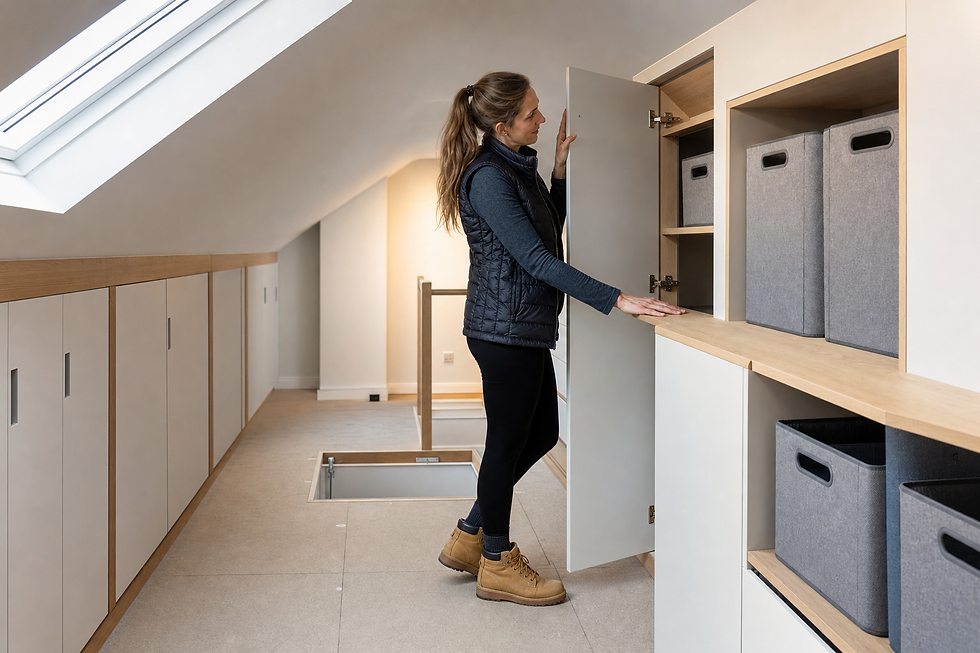
Awkward loft areas made more useful
Storage sized for real items
We use your boxes and belongings to guide practical shelf and zone dimensions.
Low eaves put to work
We can shape suitable storage around restricted areas that standard units miss.
Clear access retained
We keep sensible routes through the layout so stored items remain reachable.
Use the corners standard storage cannot reach
Sloping roofs, low eaves and odd angles can leave useful loft space doing very little. We plan bespoke loft storage around the footprint that's genuinely accessible. The sizes and types of items you keep help decide the depth, height and position of each section. Depending on the loft, practical options may include fitted shelving, low-level eaves storage, partitions and defined routes between zones. We aim to use awkward areas without making regular items difficult to retrieve. For Edinburgh homes short on cupboards, that can release valuable space in the rooms below.
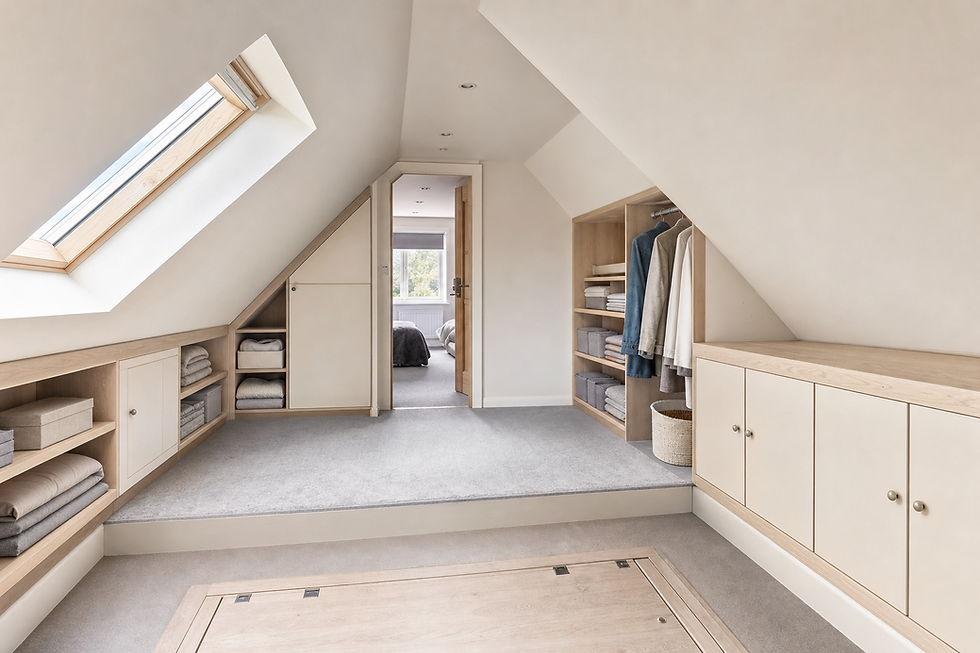
Fit storage around what you actually keep
A row of identical shelves won't suit every box, case or seasonal item. We begin by measuring the loft and discussing what needs to go there. Frequently used belongings can stay closer to the access route, while suitable low areas can hold items needed less often. We prepare and fit the agreed arrangement around roof slopes, headroom and the boarded footprint. The finished layout should be easy to understand at a glance, with a clear place for belongings and enough room to reach them without unpacking everything else first.
Frequently asked questions
What types of custom storage can you fit?
Depending on the loft, we can discuss fitted shelving, low-level eaves storage, partitions and defined storage zones. We recommend an arrangement only after measuring the space and understanding the items you need to keep.
Can you use very low areas under the roof?
Some low areas can provide useful storage for suitable items, but access and clearance still matter. We assess whether the space can be reached sensibly and design around the roof slope instead of forcing storage into an unusable corner.
How should I prepare for the planning visit?
Think about the belongings you want to store, including their rough sizes and how often you use them. This helps us place regular items nearer the route and shape less accessible areas around possessions needed less often.